Industry Solutions
Tailored solutions for diverse industries and global challenges.
Every sector below has a different constraint: coverage, lone-worker safety, discretion, or simply distance. What they share is the pattern — a workforce that moves, a dispatch desk that needs to know who to reach, and a requirement to add people without touching a frequency plan. Tell us the sector and the country and we will come back with the terminal mix and the platform setup.
 🚚
Logistics & Fleets
Logistics is where public-network radio earns its place. A delivery fleet is spread over a service area rather than a single site, the vehicles move all day, and the dispatcher's problem is not range but knowing who to reach and what they are carrying. A PoC fleet puts every driver on the same talk group as the depot without a repeater on the motorway. Add positioning and the console stops being a list of radios and becomes a live operations board.
Recommended configuration
A typical delivery fleet starts with the Locator grade in the cab and the Standard grade at the depot, with a vehicle terminal for the trucks that spend most of the day on the road.
| Terminal | Why this model in this sector |
|---|---|
| PoC Handheld Radio — Standard | At the depot and in the yard, staff hand over loads and confirm exceptions. They do not need positioning, so the entry grade keeps the unit cost down where the fleet is largest. |
| PoC Handheld Radio — Locator | Drivers need to be found, not called. Positioning turns the console from a list of radios into a map of where every van is right now, and it is the single feature that changes how a dispatch desk works. |
| PoC Vehicle Terminal | Roof-mounted units put the antenna where it can see the sky and the speaker where the driver can hear it, which is what makes a long shift usable rather than merely survivable. |
What buyers in this sector ask
Will PoC radios work inside a concrete-and-steel loading bay?
Usually, but not automatically. Cellular coverage inside a warehouse depends on the operator's in-building penetration and on how much steel and racking is in the way. We test coverage in your own buildings before we quote, and where a single dead spot matters we either add a small repeater or arrange a coverage boost with the carrier. This is the one thing worth measuring on site rather than assuming.
 🏗️
Construction Sites
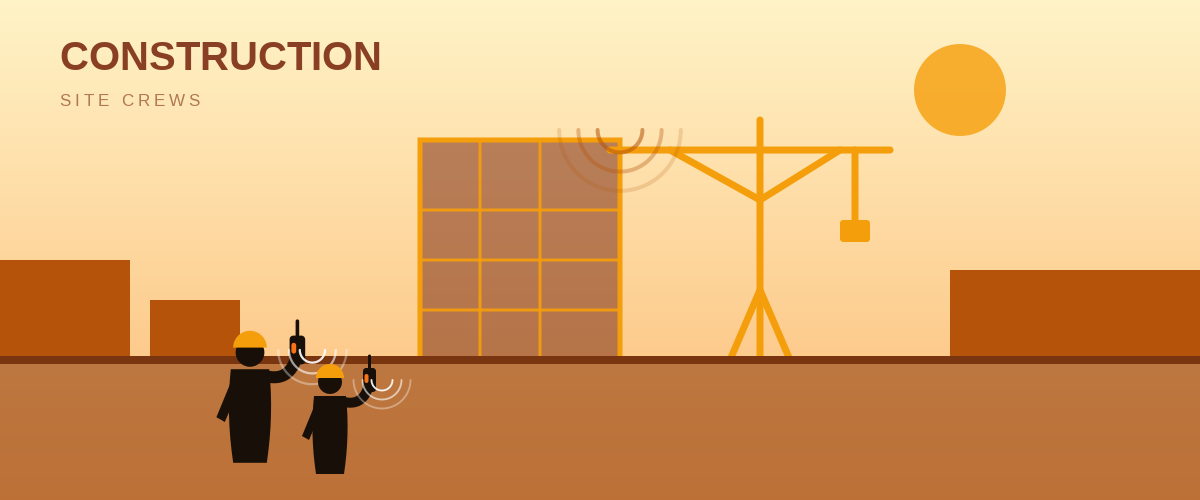
Construction is a coverage problem before it is a communications problem. The tower-crane operator is 40 metres up, the ground crew is down on the basement slab, and the site office sits in a portable cabin on the far side of the compound — three places one RF system struggles to serve and a cellular network serves from three different cells. PoC also lets every trade have its own talk group without a second licence.
Recommended configuration
Sites normally run the Flagship grade for supervisors and lone workers, the Locator grade for the crews moving around the site, and vehicle terminals for the plant on site.
| Terminal | Why this model in this sector |
|---|---|
| PoC Handheld Radio — Locator | Crews move between levels and wings all day. Positioning tells the site manager where the work actually is, which matters more than the radio itself once a shift starts. |
| PoC Handheld Radio — Flagship | Working alone on a high structure is the case fall detection exists for. A 6-axis sensor turns an immobilised worker into an alarm the site office can see, rather than a phone call that never comes. |
| PoC Vehicle Terminal | Plant and dump trucks move between the gate and the site. A roof-mounted unit gives the operator hands-free push-to-talk and takes the handset out of the cab. |
What buyers in this sector ask
Our site is a new build with almost no cellular coverage yet. Does that rule PoC out?
It is worth measuring before deciding, and a weak signal is the most common reason a site ends up running a hybrid. The operator's coverage map is a guide, not a survey: a new development may have a mast on the horizon that does not yet carry the operator's bands, and a concrete slab cuts signal in a way no map shows. We arrange a site survey or a simple signal test on your own handsets before anything is quoted. If coverage proves marginal, a small repeater at the compound often solves it for less than a dedicated radio base station would cost.
 🛡️
Security & Patrol
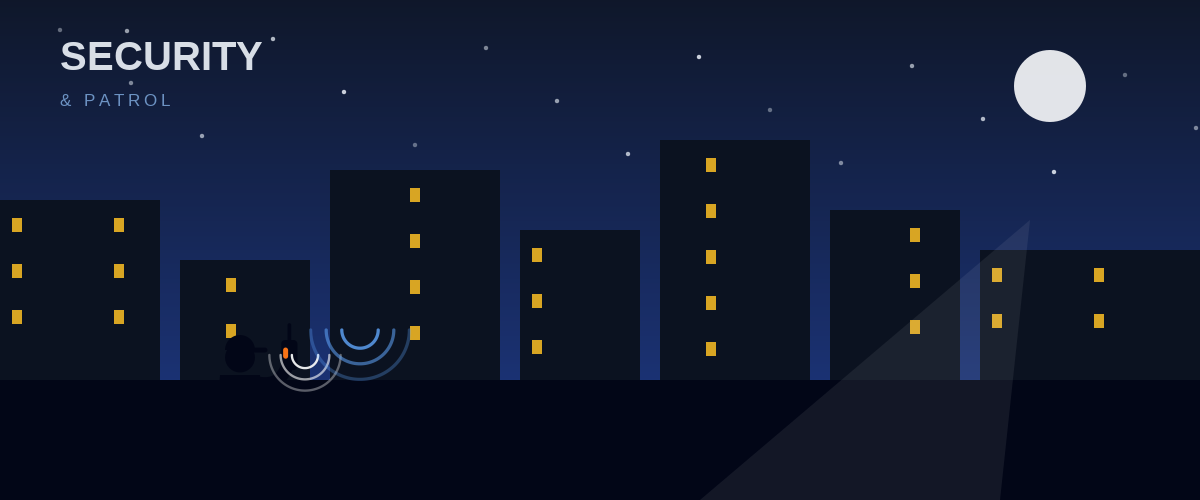
Security is a lone-worker problem. A guard on a 30-storey car park at two in the morning is alone, cannot make a normal phone call, and needs to reach a control room rather than be reached. Public-network radio fits that exactly: a dedicated SOS key that keeps working when a phone is locked in a pocket, and a console that knows which guard is in which part of the site without anyone having to say where they are.
Recommended configuration
Security teams usually take the Flagship grade for the patrol itself and the Standard grade for the control room, with body-worn cameras where evidence has to survive an incident.
| Terminal | Why this model in this sector |
|---|---|
| PoC Handheld Radio — Flagship | Fall detection, NFC patrol check-in and the dedicated SOS key are the three features that matter at night. Check-in points confirm the patrol actually happened, which is exactly what a client asks for afterwards. |
| PoC Handheld Radio — Standard | Control-room staff speak to every patrol continuously. They need a reliable handset with a loud speaker rather than a feature set, so the entry grade is the right cost for the people at the desk. |
| PoC Body Camera | Where an incident has to be reviewed afterwards, video is the record. The body-worn camera stores encrypted evidence in the cloud, tied to the same dispatch and alarm workflow the radios use. |
What buyers in this sector ask
Is it legal to record patrol staff and visitors this way?
Recording rules differ by country and by site, and the honest answer is that this needs a privacy review before deployment rather than after. In general you need a lawful basis, a retention period, restricted access to the footage and a notice to the people being recorded — visitors in a public area usually need signage rather than individual consent. We supply the technical controls: encrypted storage, role-based access and an audit log of who viewed which recording. The policy decision stays with you.
 🏨
Hospitality & Venues
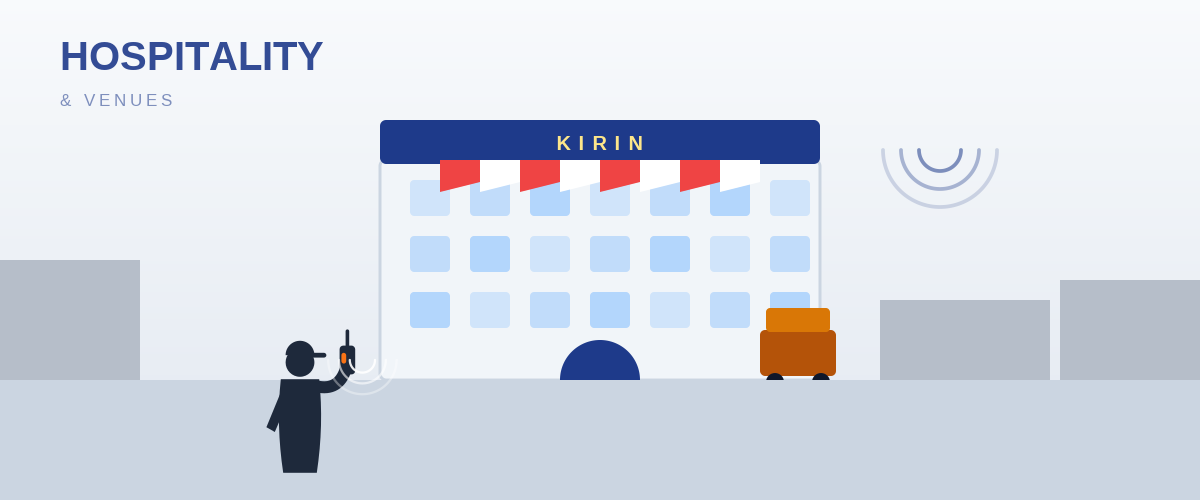
Hotels and venues have a communications problem that looks trivial and is not. Staff are spread across a building that is often thick concrete, they need to reach each other rather than the front desk, and guests should never see a radio. Public-network radio solves the second and third of those. The first is solved by checking coverage room by room rather than assuming it from the lobby.
Recommended configuration
Venue deployments tend to be smaller and run on the entry grade, with the Locator grade reserved for staff who also cover grounds or a car park.
| Terminal | Why this model in this sector |
|---|---|
| PoC Handheld Radio — Standard | Housekeeping, service and maintenance staff need to reach a colleague two floors away and do not need tracking. The entry grade keeps the deployment small and discreet, which matters when staff are visible to guests all day. |
| PoC Handheld Radio — Locator | Security and duty managers who also patrol the grounds or the car park need to be reachable by position, and to be found quickly when a guest reports a problem in one specific area. |
| PoC Handheld Radio — Flagship | Where a venue runs its own medical or security response team, the SOS key and fall detection give that team a way to be alerted rather than to guess that something is wrong. |
What buyers in this sector ask
Will radios be visible to our guests, and will they interfere with our existing systems?
They are unobtrusive — a handset or a clip-on unit, and nothing that reads as a security device to a guest. On interference: public-network radio runs on the operator's licensed cellular bands, so it needs no licence of its own and does not occupy a frequency that could conflict with your Wi-Fi, your access control or any other RF system on site. The one thing to check is whether the operator's coverage is good enough in the areas where staff work, and we test that before quoting.
Technology Advantages
Powered by innovation, built for the future.
Edge Computing
Ultra-low latency processing at the edge for real-time decision making.
End-to-End Encryption
Military-grade encryption ensuring complete data security and privacy.
Multi-Device Sync
Seamless real-time synchronization across all your devices and platforms.
AI Voice Translation
Real-time multilingual voice translation breaking communication barriers.
PoC or dedicated RF? Compare before you decide.
We put PoC over cellular, DMR, TETRA, LTE-M/4G and analog PMR side by side on coverage, range, infrastructure you must own, group push-to-talk, data and video, dispatch, licence cost and typical terminal cost. The comparison also says where PoC is the wrong answer, because sometimes it is — and no vendor names are involved.
Radio technology comparison →Virtual Demo Console
This is the NexComm dispatch console, reproduced as a self-contained simulation. Pick a talk group, hold to talk, and watch terminals move, alarms arrive and tracks replay — all in your browser, with nothing to install and no data to sign for.
Virtual Demo Console →B2B orders: volume discounts & OEM/ODM services available.
Continue to quote form